

Enhancing Collective Efficacy for Social Control, Safety, Health & Development in the Hausa Communities of Northern Nigeria (TILAS)
Enhancing Collective Efficacy for Social Control, Safety, Health & Development in the Hausa Communities of Northern Nigeria (TILAS)
Background and Rationale
Contemporary Hausa communities face significant challenges to social cohesion and collective problem-solving. Challenges such as population explosion, poverty, youth unemployment, religious polarization, and over a century of political reforms have led to inefficiency in the household units, weakening of traditional authority, and reduced civic trust. This has resulted in a critical deficit of effective platforms where community concerns can be systematically tabled, deliberated, and addressed in one of the world’s poorest regions besieged by armed banditry and violent religious extremism. The Enhancing Collective Efficacy for Social Control, Safety, Health and Development (TILAS) Project is designed to counteract this trend by strengthening local capacity for collective efficacy to improve key health and development outcomes.
Collective efficacy — defined by Sampson, Raudenbush, and Earls (1997) as the shared belief in a community’s ability to achieve common goals through mutual trust and social control can be utilized to rebuild community resilience, public safety, and improve development indices in Northern Nigeria’s Hausa societies. In these communities, traditional structures and authorities such as the household (gida), extended family (zuri’a), unit heads (masu unguwa), and district heads (hakimai) used to provide a strong foundation for community mobilization and social control. The project aims to pilot and assess the feasibility of a structured approach to joint action, leveraging, reinforcing, rebuilding these indigenous cooperative and traditional surveillance mechanisms. The ultimate objective is to institutionalize a sustainable model for community-led development that addresses interconnected social determinants of health and development. Community-led initiatives focused on collaborative governance, community resilience, reducing inequalities, and promoting sustainable development and peace in North-Western Nigeria.
To fit its application within the cultural context of Hausa society, the model is conceptualized and contextualized around four key development components, expressed in the Hausa language to ensure cultural alignment and community ownership:
- Tsafta (Sanitation)
- Ilmi (Education)
- Lafiya (Health)
- Sana’a (Economic Self-Reliance)
These elements form the acronym “TILAS”, a Hausa word meaning “necessity” or “indispensable”. This reflects the policy premise that collective action is not optional, but essential for addressing entrenched community challenges. By embedding these priorities in local language, the model strengthens community engagement, comprehension, and long-term sustainability.
Project Objective: Institutionalizing Sustainable Community-Led Development
The ultimate objective of the TILAS project is to institutionalize a sustainable model for community-led development that addresses the interconnected social determinants of health and development. This approach seeks to empower local communities to take ownership of their priorities and challenges, ensuring that solutions are culturally aligned and rooted in indigenous mechanisms of cooperation and authority. By fostering collective action across key domains—sanitation (Tsafta), education (Ilmi), health (Lafiya), and economic self-reliance (Sana’a)—the initiative aims to rebuild social cohesion, reinforce traditional structures, and enhance the community’s capacity to solve y collectively. Through this model, the project aspires to create lasting platforms for deliberation, decision-making, and action that will drive improvements in public safety, health outcomes, educational attainment, and economic empowerment within Hausa communities of Northern Nigeria.
The Hausa Identity and Regional Realities
In Northern Nigeria, the concept of Hausa identity extends beyond strict ethnic boundaries. It is often applied broadly to encompass not only those of direct Hausa descent, but also individuals who speak the Hausa language or share in its profound precolonial, colonial, and post-colonial heritage. This shared identity, shaped by a common history and political evolution, permeates nearly all the 19 Northern States, but is especially prominent in the seven Northwestern States. These states collectively have a population of approximately 54.7 million (1), with most communities being predominantly Hausa and Fulani.
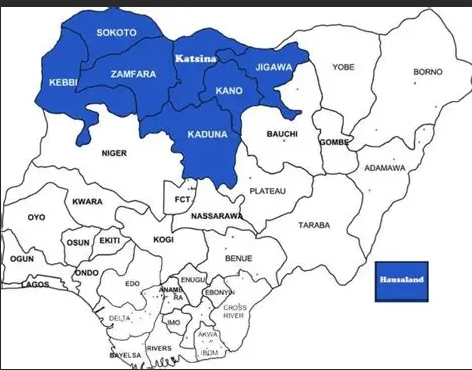
Figure 1: Hausa speaking states in Nigeria – Full list
Source: Nigerian Queries (Hausa Speaking States in Nigeria: Full List – Nigerian Queries)
Despite this strong cultural presence, the Northwest region has the largest population of individuals living in poverty in Nigeria, totaling 45.49 million (3). This figure is nearly equivalent to the combined number of people in poverty across the three southern regions and exceeds the total in the other two northern regions. Poverty rates are alarmingly high, with Sokoto experiencing rates up to 90.5%, Jigawa at 87.02%, Zamfara at 73.98%, and Kebbi at 72% (2).
These socioeconomic challenges are further compounded by the region’s status as home to the largest proportion of out-of-school and multidimensionally poor children, widespread malnutrition, elevated maternal and infant mortality, low vaccination coverage, and significant environmental degradation, including the loss of land to desertification (3). It is also the hotbed of a decade long rural banditry that has killed thousands and displaced hundreds of thousands more with millions of dollars’ worth in damages to the local economy. Among the seven states in the region, only Kano and Jigawa are not affected by widespread banditry. Jigawa, however, is the second poorest state in the region, and its North-East senatorial zone ranks among the ten poorest in the country.
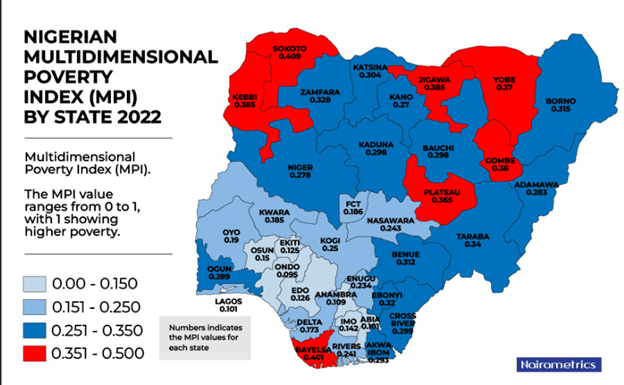
Figure 2: Multidimensional Poverty Index (MPI) by State 2022
Source: Nairametrics (Poorest states in Nigeria – 2022 – Nairametrics)
Jigawa State has a population of 6.7 million (1), records the highest under-5 deaths (4), maintains a poverty rate of 87.6% (with rates reaching up to 91.4% in Jigawa North-East) (2), and includes approximately 1.13 million multidimensionally poor children (3). As the third poorest state in Nigeria and with a largely rural demography, Jigawa is located near the North-East region, which experiences the Boko Haram violent religious extremism.
Furthermore, while the total fertility rate in Nigeria is 4.8, Jigawa has 6.9 and the proportion of teenage pregnancies at 24.1%, both figures are the highest in the country, with the second least contraceptive use. Again, the state has the worst under-5 mortality rate at 161 per 1,000 live births, enabled by low immunization coverage – percentage of children aged 24 – 35 months fully vaccinated according to the national schedule is only 7.9; malnutrition – 41.9 % highest in the country; fever; acute respiratory infections; and diarrheal diseases (4)
This context provides compelling grounds to pilot the TILAS program.
Aims and Objective
Aim: To foster collective efficacy in 5 (quarters) unguwanni within Hadejia metropolis by strengthening social trust, enhancing informal social control, and mobilizing community participation for shared developmental priorities around sanitation, education, health and self-reliance.
Specific objectives (outcomes)
- To build mutual trust among community members through culturally sensitive dialogue and decision-making forums.
- To improve community members’ participation in addressing local developmental issues related to sanitation, education, health and self-reliance.
- To enhance residents’ capacity to organize and implement small-scale collective projects.
- To integrate traditional leadership structures with modern participatory governance practices.
Implementation strategy
Implementation of the project will be in two phases covering a full year calendar, 6 months each. The first phase – setting – up the project involving drafting the concept and its scope, advocacy, consultations, interactions/meetings with pivots, trainings, starting – up the forum across units with focus of indicators, follow-up, feedback, evaluation. The second phase – evaluation and re-strategizing a more sustainable approach, implementation, follow-up, feedback, and evaluation. Finally, report writing.
The First Phase
The project activities will begin with the pre-implementation paperwork and consultations. The draft and refined version of the implementation strategies will be ready by the mid of October 2025. In the third week of October, the team will visit the district heads of Hadejia, Atafi, and Waje, as three districts of the metropolis, and brief them on the project and its benefits. Upon acceptance, by the district head, the interaction will commence immediately.
Community Selection Strategy: A Multi-Criteria Approach
A transparent and strategic selection of communities is crucial for demonstrating impact and ensuring sustainability. The selection will be based on a mix of objective data and participatory assessment. The objective data comprises information on the location of the community, and existing structures that can serve as a fertile ground to anchor the implementation. While the participatory assessment is connected to participation in the interactive session, in which the capable leaders who have passion for the project can be identified.
A multi-stage cluster sampling technique will be employed to select thirty (30) unit heads (Masu Unguwanni). In the initial stage, complete lists of the Unguwanni will be obtained from the offices of the district heads, which will guide sampling and selection method, using multi-criteria approach. Then, ten (10) units will be randomly selected from each of the three districts, Atafi, Waje, and Hadejia’ resulting in a total of thirty (30) participating units. These selected Masu Unguwanni will subsequently be invited to a facilitated interactive session convened at a designated event center.
During this session, participants will be systematically introduced to the conceptual foundations and practical significance of collective efficacy, emphasizing the pivotal role of local leaders as anchors and catalysts in driving the project’s objectives. The training will integrate reflective reasoning exercises designed to foster critical dialogue and collaborative problem-solving. The session will seek to introduce the rationale and relevance of the project’s aim and objectives. The pilot initiative, titled “Mu Tsira Tare” (Let Us Survive Together), will operationalize the four core domains of sanitation (Tsafta), education (Ilmi), health (Lafiya), and economic self-reliance (Sana’a). These domains collectively form the acronym TILAS, derived from the Hausa term signifying necessity or indispensability. This framework reflects the project’s core vision of institutionalizing collective action as a locally grounded and sustainable strategy for community development and resilience.
The session will also seek to explore the best method to select initial members to form the community forum, from among elders, youth, and women. This process will culminate in the identification of five (5) passionate leaders among the participants, from strategically positioned units, carefully selected based on contextual suitability and operational feasibility, to serve as pilot communities for the intervention. The selection will be in a post-session meeting by the facilitators.
The resources required for this pre-implementation interactive session include a well-equipped hall suitable for group activities and the projection of training materials, as well as essential supplies such as notebooks, writing materials, and cardboard sheets for practical exercises. In addition, at least two qualified resource persons will be needed to facilitate the sessions. Provision should also be made for refreshments, including food and drinks, to ensure participant engagement and comfort throughout the program. While branded shirts for facilitators and participants are optional, they can serve as a powerful tool to promote visibility, foster commitment, and enhance community awareness about the initiative. The shirts could feature the logos of the two implementing organizations, Unik Impact and E-YEEES, positioned on the front, one on each side, symbolizing collaboration. On the back of the shirt, the words “TILAS” and “Mu Tsira Tare” could be prominently displayed, reinforcing both the project’s thematic focus and its underlying rationale of collective efficacy in community-driven development.
Implementation Framework: Strategies for Achieving Objectives
Upon the selection of the five sample communities, the project will be implemented through a structured, yet flexible framework centered on establishing ‘Zauren Shawara’ ‘Community Action Teams’ (CATs). The unit head will select the 10 members start-up members for creating the forum, using the method of avoiding all sorts of bias in the process derived during the first interactive session. The names of the selected members will be obtained for subsequent activities. The Mai Unguwa should serve as the pivot that will guide and ensure conduct of the forum, through organizing meetings, and implementation of activities. The membership can be drawn from retired civil servants, health workers, teachers, and individuals identified with wisdom, who can help and influence achievement of the objectives the forum is purport to serve. Voluntary membership from other individuals will also be accepted and documented by the secretary of the forum.
The project’s first objective is to build mutual trust among community members through culturally sensitive dialogue and inclusive decision-making forums. Therefore, the first activity for the five selected Ma Su Unguwanni will be establishing ‘Community Action Teams’ (CATs) ‘zauren shawara’, which will be evaluated quarterly by the extent of successful conduct of meeting and rate of attendance, rate of voluntary participation, and members’ commitment in designing activities that promotes social cohesion, as the key indicators for evaluating success.
In each of the 5 selected communities, the project facilitators will facilitate a participatory process to form a CAT of 10-15 members. Membership invitation from the Mai Unguwa will be based on an identified wisdom of the individual invited. To ensure inclusion, the percentage of the members should be (not necessary) 20% women, 20% youth, 60% elders/leaders, with representation from different kinship or family network (in homogeneous community) and or from diverse groups (in heterogeneous community). For consideration of culturally sensitive approach, the formation will be inaugurated with a formal visit to the Hakimi (District Head) and Dagaci (Ward Head) to seek their blessing, aligning with traditional protocols.
In their first meetings, instead of starting with problems, trained facilitators will guide the leaders to take along the CATs through “Appreciative Inquiry” workshops. These sessions begin by asking “What is best about our community?” and “What gives us pride?” to build a positive foundation. This method builds trust before tackling difficult issues. It shifts the focus from blame to shared strengths, creating a safe space for dialogue. Then TILAS indicators will be introduced, and an agreement would be targeted on how to achieve the indicators. For example, to achive sanitation and education, an agreement on refuse collection system can be designed, a collection spot can be established, and days on which the general refuse will be collected, as well as spraying against disease vectors. The forum can brainstorm on sustaining the process through establishing a contributory plan among community members. Another example can be a voluntary extra lesson for children at school free hours by teaching volunteers in the community, and so many other examples. It is important to note that any activity designed and agreed upon should align with the TILAS model and must be realistic.
Another objective of the project is to improve community monitoring and informal accountability systems, for tracking results, both successes and failures, and to be able to identify the strengths or weaknesses that caused the outcomes. To do this, a sub-committee can be created from the general forum. Their focus will be on ‘Vulnerability and Service Delivery Monitoring’. One possible way to achieve this is to train the selected members for the task in working with simple monitoring tools. For example, Safety Audits, which involves participatory mapping of unsafe spaces (e.g., houses where illicit substances are sold, harmful materials disposed, drainage blockage and so on). Therefore, a Service Report Cards, such as simple scorecards can be used to collectively assess the state of public services like water points, schools, and health clinics. A response to this can be an introduction of a “Community Dashboard”—a large physical board placed in a public area (e.g., near the mosque or market) where non-sensitive monitoring results (e.g., “Drainage Blockage at X Street – Status: Reported to LGA”) are displayed for all to see.
Moreover, community monitoring and informal accountability can be achieved by establishing a monthly “Tattaunawa” (Accountability Forums). The CAT will organize monthly public forums, named using a culturally resonant term like Zauren Tattaunawa (Forum of Deliberation). At these forums, the CAT presents monitoring findings, such as LGA officials (e.g., Works Department, Education Secretary) are invited to respond to community concerns and provide updates. Or a particular empowerment program which trained a certain number of women on tailoring and so on. The dialogue should be moderated by a respected traditional leader to ensure respect and order.
The third objective is to enhance residents’ capacity to organize and implement small-scale collective projects. This can be achieved by conducting practical, hands-on training in Participatory Project Cycle Management for the CATs on the basics of project management. In the training session, simple pictorial tools can be used for demonstrations to ensure inclusive understanding, even for members with low literacy. Additionally, the CATs will be encouraged to establish a Community Projects Fund (CPF). They can be helped with start-up funding, through provision of resources required. For example, provision of insecticide with a sprayer, which would be used in controlling mosquitos around the community, targeting their breeding grounds. The condition for the provision can be suggested to be that the community must contribute at least 20% of the project cost of the in-kind (labor, materials) to foster ownership.
The last, not the least, objective is to integrate traditional leadership structures with modern participatory governance practices. The formation of CATs within the community can help in forming a supra-community structure and ushering modern participatory governance, where individuals from diverse groups and backgrounds are represented. Whilst the forum streamlines access to both traditional and government officials regarding public concerns. The network can be extended to other crucial agencies, such as police, Road Safety officers, NDLEA, NSCDC, Hisbah and so on
As the process continues, representation of CATs from all the units can create ward development forum. From the ward level a general forum of representation from the wards can be created for the general town, to form the Hadejia Peace and Development Alliance (HPDA). At the HPDA level, representatives of local government, emirate council, and other civil service organizations can participate for deeper deliberations and finetuning development towards creating a more ‘organized society’ which reflects transformation for freedom and development that aligns with Hadejia cultural values and ethics.
The HPDA will serve as a bridge between the communities and the LGA, advocating for larger-scale interventions and resolving conflicts that transcend a single community. The HPDA can facilitate a process where the HPDA collectively drafts a “Hadejia Community Charter.” This document will outline mutual rights and responsibilities of citizens and local government, agreed-upon protocols for communication and accountability, as well as shared values for peaceful coexistence. If this comes to be realistic, a public ceremony where all stakeholders sign the charter, giving it cultural and political weight and formalizing the new, integrated governance practice.
This concept ensures that the project is deeply rooted in the local context, builds on existing structures, and systematically enhances the community’s ability to act collectively for its own development and safety. The key to success is not doing things for the community but creating platforms and skills for them to do it for themselves. Essentially, restoring the prestige of traditional structure streamlining their relevance in modern governance. The above stage is proposed to be achieved within 6 months from starting the project implementation.
Simple Action plan for the setting – up stage
| Activity | Person(s) responsible | Date(s) | Resource(s) required |
| Drafting the concept and its scope | 20th September 2025 – 10th October 2025 | Computer, note book, pen | |
| Advocacy visits | 15th October 2025 | 3 facilitators and means of transportation to visit three district offices | |
| Selection of 30 participants among the unit heads | 19th – 20th October 2025 | Comprehensive lists of the unit heads under 3 districts | |
| Consulting the selected unit heads | 23rd – 25th October 2025 | Airtime on dedicated phone number. | |
| Interactions/meetings with pivots | 1st November 2025 | Meeting hall, writing materials, projector, computer, resource persons, refreshments, transportation, branded shirts | |
| Facilitating formation of CATs | 15th November 2025 | Transportation, meeting room/space | |
| Training of CATs representation | 29th November 2025 | Refreshments, meeting hall, writing materials, projector, banner, etc | |
| Starting – up the forum across units | 7th December 2025 | Transportation means, provision of resources such as sprayer and insecticides
|
|
| Follow – up visits | 4th January 2025 | Transportation means, notebook and pen, checklist template
|
|
| Discussing feedbacks meeting | 18th January 2025 | Meeting room, Writing materials, projector and computer | |
| Evaluation/report writing | 20th January – 20th February 2025 | Computer and printer. | |
| Strategizing further action. |
Hadejia District List of Units and their Heads
| S/N | Unit (Unguwa) | Unit Heads (Mai Unguwa) |
| 1. | Rumfa | Abdullahi Ali |
| 2. | Kwarin Naganda | Alhaji Garba Usman |
| 3. | Tagurzan Gabas | Alhaji Ibrahim Gambo |
| 4. | Makwalla B | Danladi Driver |
| 5. | Tagurzan Yamma | Dodo S. Fawa |
| 6. | Kilabakori | Malam Kadai Adamu |
| 7. | Kwarin Lifida | Malam Ubali |
| 8. | Dirimin Gamma | Alhaji Muhammad Dudu |
| 9. | Unguwar Ma’aji | Mai Unguwa Sabo |
| 10. | Bayi | Muhammad Kani Abubakar |
| 11. | Baderin Gabas | Sarkin Jauje |
| 12. | Ilallah | Alhaji Sani Ya’u |
| 13. | Makeran Gabas | Alhaji Maigari |
| 14. | Sabon Garu | Muhammad Mai Unguwa |
| 15. | Unguwar Alhaji | Sankira Dan Abba |
| 16. | Kwarin Madacima | Babangida Ahmad |
| 17. | Zonagalari | Malam Muhammad Kyari |
| 18. | Kakabori | Bala Babani Sani |
| 19. | Majema | Malam Kawu Garba |
| 20. | Gagulmari | Malam Auwal Mai wada |
| 21. | Rinde | Abdullahi Garba Rinde |
| 22. | Unguwar Mu’azu | Sabo Babale |
| 23. | Gabari | Malam Idris Ya’u |
| 24. | Auyakayi | Abdullahi Dangwani |
| 25. | Chadi | Sa’idu Kanti |
| 26. | Matsaro | Ibrahim Sulaiman |
Atafi district List of Units and their Heads
| S/N | Unit (Unguwa) | Unit Heads (Mai Unguwa) | Phone Number |
| 1. | Dala | Ahmed Mohamed | 09167776197 |
| 2. | Ankun Gabas | Kani Mohammed | 08029620254 |
| 3. | Ankun Yamma | Garba Ligidi | 09025283650 |
| 4. | Kuburu | Baba Sule | 08031512118 |
| 5. | Agumau | Jarma Uba | 08037735836 |
| 6. | Nasarawa | Musa Nabintu | 08067246585 |
| 7. | Kyalesu | Atyuba Garba | 09158543276 |
| 8. | Yayari | Abdullahi AG | 07060507350 |
| 9. | Tudun Wada | Babangida Abdulmumini | 07038920590 |
| 10. | Garko | Sule Yusha’u | 07061035340 |
| 11. | Farin Gida | Adamu Abba | 08068931857 |
| 12. | Kasuwar Kuda | Muhammad Kakuka | 08144455356 |
| 13. | Yalwa | Ahmad Mohammed | 08064788263 |
| 14. | Kasgayama | Dalibi Abdullahi | 08036671098 |
| 15. | Sararin Rakuma | Mohammed Abdullahi | 08067787487 |
| 16. | Oliya | Baba Ali | 07038559122 |
| 17. | Dikila | Mohammed Babaye | 09126065287 |
| 18. | Ung. M. Yahaya | Tafida Umar | 07030657560 |
| 19. | Makera | Hamisu Mohammed | 08065402567 |
| 20. | Madaura | Kawu Haruna | 07038177738 |
| 21. | Ung. Maidu | Barau Haruna | 08034617433 |
| 22. | Masaka | Musa Yahaya | 08039745969 |
| 23. | Galo | Baba Yahaya | 08130340649 |
| 24. | Ung. S/Fawa | Adamu Sarkin Fawa | 08106301546 |
| 25. | Kwarin Manu | Musa Umar | 08102539520 |
| 26. | Tudun Barde | Lamara mohammed | 07062574777 |
| 27. | Kachallami | Abdullahi Shahada | 08036407315 |
| 28. | Ung. Sarkin Ruwa | Musa Yayan-chadi | 08034716855 |
| 29. | Dubantu | Ahmad A. Tela | 08067544990 |
| 30. | Baderi | Magaji Bura | 08131556604 |
| 31. | Ung Makama Kigo | Ibrahim Makama | 07066439091 |
| 32. | Ung. Adamu | Adamu Danboti | 07063064664 |
| 33. | Kasuwar kofa | Garba Isyaku | 08060453506 |
| 34. | Ung. M. Babaru | Alhaji Mamman | 08068159914 |
| 35. | Dallah | Adamu Muhammad | 08140106002 |
| 36. | Atafi | Mohammed Yakubu | 07030877676 |
| 37. | Fantai | Bako Abubakar | 08065994872 |
| 38. | Fanisau | Dalha Abubakar | 08062587149 |
| 39. | Kwarin Madaki | Muhammad Salihu | 08033771336 |
| 40. | Makwalla A | Hassan Haruna | 08064348453 |
| 41. | Wuriwa | Maina Babale | 08064348453 |
| 42. | Yankoli | Mohammed Danyaro | 07030306803 |
Waje District List of Units and their Heads
| S/N | Unit | Head |
| KADUME KWARI | ||
| 1. | Me Randa | Muhammadu Dan Gwaram |
| 2. | Mai Dalawa | Hashim Turaki |
| 3. | Agubu | Aminu Muhammad |
| 4. | Kadimen Tudu | Malam Uba |
| 5. | K/Fada | Sunusi Musa |
| 6. | Barka | Isma’ila Idris |
| 7. | Ilallar Kadime | Yusif Mu’azu |
| 8. | Jama’are Quarters | Isyaku Habibu |
| 9. | Mushimbura | Muhammad Gida |
| GANDUN SARKI | ||
| 10. | Jigawar Kassim | Muhmmad Garba |
| 11. | Jigawar Musa | Idris Gambo Ali |
| 12. | Jametami | Rabi;u Abdullahi |
| 13. | Sharigar Yamma | Abdullahi Muhammad |
| 14. | Gandun Galadima | Babangida Jibrin |
| 15. | Ganduma | Musa Musa |
| 16. | Unguwar Sama | Uba Adamu |
| 17. | Zubairu Isyaku | Unguwar Namadaki |
| 18. | Unguwar Kudu | Sa’idu Adamu |
| 19. | Unguwar Yarimawa | Muhammad Bagana |
| 20. | Garin Arewa | Shuaibu Abdulkadir |
| 21 | Unguwar Hamza Abdullahi | Abubakar Ahmad |
| 22. | Unguwar Contry | Sani Muhammad |
| 23. | Unguwar Sarkin Daji | Abdulmumini Idris |
| 24. | Unguwar kofar Fada | Alh. Hassan Muhammad |
| 25. | Unguwar Ramin Sa’a | Zakar Hassan |
| 26. | Unguwar chiromawa | Haruna Shu’aibu |
| 27. | Unguwar Baba Ali | Sunusi Ali |
| 28. | Unguwar Garke | Adamu Salati |
| 29. | Unguwar Liman | Yusif Usman |
| 30. | Unguwar Arewa | Adamu Isma’il |
| 31 | Unguwar Gabas | Sani Muhammad |
| GANDUN BUNDUGOMA | ||
| 32. | Gandun Bundugoma Sabuwa | Saleh Muhammad |
| 33. | Me Alkama | Yakubu Mukaddas |
| 34. | Mafucin Sarki | Alhaji Angazi |
| 35. | Jangago | Sulaiman A. Sani Kaila |
| 36. | Gawuna | Danbaba Nasalla |
| 37. | Gawon Dogari | Muhammad Kawu |
| 38. | Kantin Waje | Ayuba Abubakar |
| 39. | Gawon Auduga | Ahmad Abubakar Abba |
| 40. | Unguwar Gabari Waje | Usman Hussaini |
| 41. | Unguwar Rizabuwa | Garba Abdullahi |
| 42. | Unguwar Sa’a | Kabiru Mu’azu |
| 43. | Unguwar Walawa | Sulaiman Muhammad |
| 44. | Unguwar Makarar Duhu | Hassan Abdullahi |
| 45. | Unguwar Kyalesu Waje | Muhammad Sani |
| 46. | Gandun Bundugoma | Alhaji Sule Muhammad |
| 47. | Abujan Amare | Danliti Driver |
| 48. | Unguwar Gabas | Muhammad Balarabe Danbaga |
| 49. | Unguwar Fuskar Gabas | Muhammad Ibrahim Muhammad |
| 50. | Unguwar Turaki | Muhammad Abdullahi |
| 51. | Unguwar Makarar Haske | Alhaji Ubali Dantatu |
| 53. | Unguwar G.R.A. | Usman Mai Kudi |
| 54. | Unguwar Sambo | Umar Muhammad |
| 55. | Unguwar Tatagana | Yakubu Sulaiman |
| 56. | Unguwar Maina | Isah Isyaku Danbichi |
| 57. | Unguwar Rijiyar Kwarori | Muhammad Ibrahim Maigari |
| 58. | Unguwar Sarki | Jibrin Abdullahi |
| SHARIGA | ||
| 59. | Unguwar Mandara | Zubairu Alhassan |
| 60. | Unguwar Bariki | Sulaiman Adamu Mai Dallah |
| 61. | Gudiccin | Auwal Muhammad Ishaq |
| 62. | Unguwar Aguyaka | Idris Saleh |
| 63. | Unguwar Bello Bayi | Abubakar Dodo |
| 64. | Unguwar NTA Quarters | Isah Ala Turaki |
| 65. | Rugar Isah | Muhammad Isah Maijama’a |
| 66. | Sharigan Tsakiya | Maijama’a Adamu |
| 67. | Unguwar Mai Kanya | Ibrahim Namadina |
| 68. | Unguwar Jaji | Sa’adu Ali |
| 69. | Zangon Kwarori | Malam Yakubu Wargale |
| BUBBAR RUGA | ||
| 70. | Babbar Ruga | Hassan Ibrahim |
| 71. | Gandun Kabo | Muhammad Sani |
| 72. | Gandun Turaki | Muhammad Mailazza |
| 73. | Unguwar Gasoka | Yakubu Idi |
| 74. | Shagari Quarters | Hassan Abba |
| 75. | Unguwar Maishahada | Muhammad Abdullahi Madaki |
| 76. | Warwarin | Muhammad Bashir Baima |
| 77. | Unguwar Kuka Uku | Nuhu Muhammad |
| 78. | Turarawa | Malam Abdu Mai Tanda |
| 79. | Unguwar Bye-pass | Muhammad Lawan |
- Nigeria’s population: state by state according NPC (2024) https://schoolings.org/nigerias-population-state-by-state-according-to-npc/
- Top 15 poorest states in Nigeria (2023)
https://www.withinnigeria.com/piece/2023/08/03/top-15-poorest-states-in-nigeria/
- NIGERIA MULTIDIMENSIONAL POVERTY INDEX (2022)
- Nigeria Demographic and Health Survey (DHS) 2023-2024: Key Indicators https://dhsprogram.com/pubs/pdf/PR157/PR157.pdf
